

How To Repair Fracture Metacarpal
Background: Comminuted fractures of the metacarpals are both extremely painful and hard for surgeons to repair. A strong, fast acting repair must be made to realign minute fragments of os properly. Cyanoacrylate and demineralized bone matrix (DBM) take proven effective individually for certain repairs, but the efficacy of a combined handling has non been confirmed. The purpose of this written report is to examination the forcefulness of the repair when using a combined treatment of cyanoacrylate mixed with DBM in comminuted fractures.
Methods: Xvi metacarpals (2nd-5th) were nerveless from cadavers and fractured into 3 pieces at thirty-caste angles to simulate a comminuted fracture. Iii treatment groups were assessed: repair with cyanoacrylate mucilage (northward=4), repair with cyanoacrylate and DBM combined (n=4), and repair using titanium plates and screws (northward=8). Bones were pulled apart until repair failure with an Instron 5542 machine and the load at break (N) was recorded for each sample. IBM SPSS Statistics 24 was used to perform all statistical analysis. Independent sample t-tests were performed to compare group sample ways. P-values < 0.05 were considered significant.
Results: The titanium plate with screws repair demonstrated a significantly higher load at suspension across all metacarpals (avg=91.745 ± 12.575). There was no significant difference between the load at break for the cyanoacrylate glue (avg=39.855 ± 8.105) and the cyanoacrylate glue mixed with DBM groups (avg=28.664 ± 8.375). The 4th metacarpal produced the lowest load at pause for the titanium plate with screws repair and the cyanoacrylate repair while the 5th metacarpal presented the lowest load at break for the cyanoacrylate mixed with DBM repair.
Conclusions: The improver of DBM to cyanoacrylate does not significantly compromise the agglutinative strength of cyanoacrylate. Titanium plates offering the strongest repair of the three groups. When bone fragments are too modest to adhere plates, the cyanoacrylate and DBM mixture creates a putty assuasive easy realignment of the fragments while maintaining the force of cyanoacrylate. This written report was not conducive to examining DBM'due south osteoinductive nor osteoconductive properties since all tests were done ex vivo. Further research should examine repairs over time using cyanoacrylate mixed with DBM in vivo.
Metacarpal fractures contain roughly 40% of hand fractures [one]. When the majority of people refer to a "broken hand", almost likely they are referring to a fracture of 1 of the metacarpal basic. Injury can occur in the neck, shaft, or head of the metacarpals [1]. The fifth metacarpal is the nearly ordinarily injured metacarpal, usually acquired by punching an object and usually referred to as a "boxer's fracture" [2]. The fractures can be identified as oblique, transverse, spiral, or comminuted [2]. Comminuted fractures of the hand are technical challenges that surgeons have to confront. The lack of bone infrastructure complicates fixation, obligating the patient to endure longer periods of hurting, immobilization and rehabilitation. Even when surgery is an available option, the demanding effort and long operative times are substantial. Comminuted fractures most commonly occur at the metacarpal head and more often than not have articular involvement [two]. Current surgical interventions include Kirschner wire (K-wire), screws, or plates. For comminuted fractures, Chiliad-wire is generally considered the best option due to its low invasiveness and long-term function [one]. Grand-wire, all the same, can pb to infection and requires a follow-up procedure with the patient to exist removed. Bio-absorbable plates accept shown promising results in cadaveric studies, but due to concerns about foreign body reactions after implantation demand to be farther studied earlier being used in patients [1].
Adhesives provide an alternative solution that is minimally invasive, offers strong fixation, and preserves soft tissue, blood supply, and trophic factors of bone [3]. Cyanoacrylate has shown recent hope as a potent adhesive that does not cause significant inflammatory responses when implanted [3]. Its apply is very popular amongst surgeons as a common tool to close wounds and also as a final dressing. Cyanoacrylate's various other uses include: dental adhesives, temporary repair of corneal perforations, drug carriers, controlling variceal bleeding, decision-making hemorrhages, and non-load bearing cranio-facial skeletal procedures [3,four]. Cyanoacrylate offers the advantages of quick one-step application without the need for external free energy, easy storage, and potent adhesions to multiple surfaces even in wet weather [4]. Further testing needs to be completed to detect its efficacy for other possible injuries. Demineralized Bone Matrix (DBM) has gained attention due to its easy availability along with its osteoconductive and osteoinductive properties [5]. Effectiveness of DBM can vary widely based on how information technology is processed, washed, and stored [5]. DBM has no risk of an immune response from the host due to its antigens being destroyed during the demineralization procedure [5]. Some literature recommends its utilize over autogenous bone grafts due to improved outcomes [6]. A combination therapy of cyanoacrylate mixed with DBM could provide a synergistic do good for os repair that has not been tested nonetheless. This innovative combination adhesive needs to exist tested against both cyanoacrylate by itself and against electric current hardware to prove its efficacy. The specific aim for this project is to test the strength of cyanoacrylate mixed with demineralized bone matrix to repair comminuted fractures in metacarpals. A novel technique is necessary to provide a simple and fast way to treat these hard cases.
Lightly embalmed fresh cadavers were obtained under the cadaveric anatomical souvenir program of the Vanderbilt Anatomy Laboratory in compliance with institutional policies and nether the supervision of back up personnel. Any cadavers with history of osteopenia, osteoporosis, hand trauma or paw surgery were excluded from the report. From two cadavers, the second, third, fourth, and fifth metacarpals were collected from both right and left hands. All the metacarpals from ane hand were put in their own designated container to ensure all iv metacarpals were used for the same treatment. The metacarpals were transected with a paw saw at each methaphysis at a 30-degree angle to reach a comminuted fracture (Figure 1). The metacarpals from each hand were divided into 3 groups. The first group, denominated Plates/screws, was repaired using titanium plates with one 2.0 mm diameter screw 4 mm long, that was placed unicortically in each os fragment (Figure ii). The adjacent group, the Glue-only group was repaired using only commercially available ethyl-cyanoacrylate glue on the surface of each bone fragment. Once fixated, a wax newspaper wrap was placed around the shaft of the bone to ensure proper alignment remained during testing. (Figure iii) The last group, the Gum/DBM was repaired using equal parts demineralized os matrix and ethyl-cyanoacrylate glue on the bone fragments. This grouping was as well wrapped with the wax paper to retain proper alignment after repair. An Instron 5542 machine was used to calculate the load and energy at the pause. In order to attach the basic to the Instron machine without severely damaging the os, ½" diameter forest blocks were clamped into each loading cell with ane/sixteen" diameter holes through the bottom of the blocks. one/16" diameter holes were drilled through the head and base of each metacarpal and a stainless-steel wire was run through both the forest and the bone and then tied at the ends to avoid slippage. (Figure iv) In one case the metacarpal was properly placed in the Instron, a tension exam was performed which pulled the os longitudinally at a rate of 2 mm per second until break.
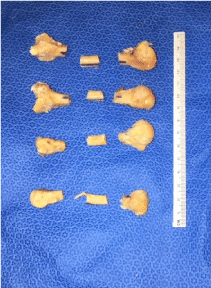
Figure one. Comminuted fractures in metacarpals.
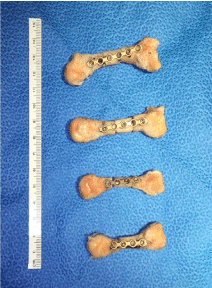
Figure 2. Plate with screws repair.
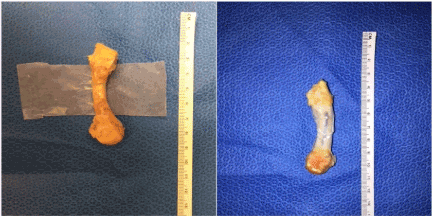
Figure 3. Os Repaired with Glue and Demineralized Bone Matrix before (left) and afterward (correct) wrap.
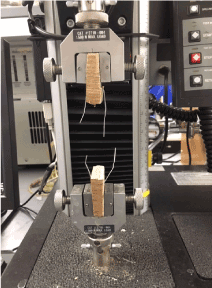
Figure 4. Instron with customized grips.
IBM SPSS Statistics 24 was used to perform all statistical analysis. Independent sample t-tests were performed to compare grouping sample ways. P-values < 0.05 were considered meaning.
The bones treated with Glue-just had an average load at pause of 39.85 N and the metacarpals treated with Glue/DBM had an average load at break of 28.66 Northward (Effigy five), with no statistical significance between the two groups(p=0.37). The Plate/screws grouping had an average load at break of 91.74 N (Effigy 5), when compared to the Mucilage-simply and the Glue/DBM, the difference was statistically meaning (p=0.004 and p=0.001, respectively).
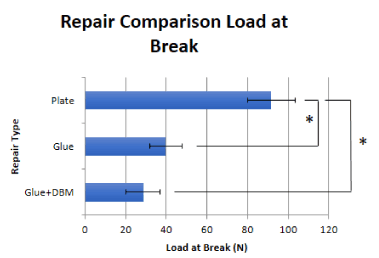
Figure 5. Average Load at Break between Repair Groups (N).
The load at break of each individual metacarpal was compared between groups. The second metacarpal was the strongest across all groups (Table 1, Effigy 6). The weakest bone was the fourth metacarpal in the Glue-but and Plates/screws groups (Tabular array 1, Figure vi). The 5th metacarpal was weakest in the Glue/DBM group (Table ane, Effigy 6).
Table ane. Load at break (North) of each metacarpal across repair groups.
| Metacarpal # | Gum+DBM | Glue | Plates/Screws |
| 5th | 12.06545 | 34.77707 | 116.924875 |
| 4th | 18.35927 | 23.69474 | 105.021705 |
| 3rd | 35.11009 | 38.72836 | 59.328725 |
| 2d | 49.1219 | 62.21903 | 85.702895 |
| AVG | 28.6641775 | 39.8548 | 91.74455 |
| SD | 16.7508912 | 16.210681 | 25.1503407 |
| SEM | 8.37544562 | eight.10534048 | 12.5751704 |
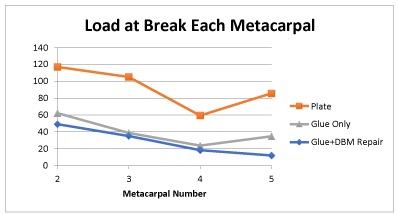
Figure 6. Load at break for each metacarpal between repair groups.
Comminuted fractures need a more constructive and surgically simple form of repair. Cyanoacrylate has yet to be tested on os repair outside of maxillofacial surgeries [7]. Demineralized bone matrix has shown promise in filling in defects in bone [8]. There has yet to exist an effective mucilage combination with demineralized os matrix without severely compromising the strength of the bonding agglutinative [8]. This combination of cyanoacrylate glue and demineralized bone matrix could provide the quick and simple repair needed for comminuted fractures. Both take individually shown promise in fields of orthopedics and dentistry with new and exciting discoveries still being made concerning the properties of each [9,10].
The data indicates that demineralized bone matrix can be mixed with cyanoacrylate without significantly affecting the maximum load that the repair tin can withstand. It is of import to note the subjective ease of repair that the Glue/DBX mixture allows over merely cyanoacrylate by itself. The DBX acts like a putty that provides surface area for the glue to hold each bone fragment together. With cyanoacrylate by itself, if the bone fragment surfaces were not perfectly in contact with each other so the glue would not hold. This is an important ascertainment when considering future clinical awarding since comminuted fractures will not be equally clean and precise every bit the fractures recreated in this experiment. The titanium plate intervention was by far the strongest group, and should exist recommended as the standard of care for fractures of larger bone. The real dilemma remains when os fragments after a fracture are also small to use plates.
One peculiar finding was that for the Plate/screw and Glue-only groups, the quaternary metacarpal withstood less strength than the 5th metacarpal. One would await that since the 5th metacarpal is the smallest os and the most ordinarily fractured, its repair would be the weakest out of the iv metacarpals tested. At first we thought nosotros had just mistook the 4th metacarpal for the fifth, only when the aforementioned results appeared for both plate and glue groups, we proposed unlike solutions. The fourth metacarpal in men is significantly narrower than the 5th metacarpal [11] This reduction in surface expanse for the glue to hold is the simplest explanation to why the quaternary metacarpal was weaker than the fifth. Some other proposed theory is that since the fifth metacarpal was more than fragile, it was easier to fracture and as a consequence had a cleaner fracture than the quaternary metacarpal. Due to their similarity in size, this fabricated the repair on the cleaner cut stronger with both the glue merely and the plates with screws. Conversely, in the Mucilage/DBM group, the demineralized bone matrix was able to recoup for the uneven surfaces past creating a uniform surface over the fragments. This intervention by itself increased improved the repair by increasing the surface area in contact with the adhesive. Accordingly, the Glue/DBX's strength decreased uniformly with size of the metacarpal.
The largest limitation of our study is that the form of cyanoacrylate we used was ethyl-cyanoacrylate. This has a shorter side chain than other ordinarily used cyanoacrylate products. Ethyl-cyanoacrylate has been shown to exhibit toxicity in clinical utilize [4]. Before in vivo testing, stability of butyl-cyanoacrylate or octyl-cyanoacrylate mixed with demineralized os matrix must be tested. Future studies could compare the three types of cyanoacrylate to see which could provide the strongest repair with the least likelihood for immunological response. Some other limitation is that nosotros are not able to assess the demineralized bone matrix's osteoinductive or osteoconductive properties since this study was ex vivo. These limitations should exist focused on for future aims of our studies.
Comminuted fractures are painful and difficult for both patients and surgeons. A strong, apace acting adhesive should be able to improve outcomes and cutting downwards on surgical times. The strength and speed of cyanoacrylate combined with the osteoinductive and osteoconductive properties of demineralized bone matrix provides an ideal treatment for comminuted fractures. Further testing should experiment with dissimilar sized cyanoacrylate molecules (butyl or octyl) to see if demineralized bone matrix is compatible with variations of cyanoacrylate with longer side chains.
This report was supported by Vanderbilt University Medical Center Section of Plastic Surgery funds.
- Haughton D, Jordan D, Malahias 1000, Hindocha S, Khan Westward (2012) Principles of hand fracture management.Open Orthop Jsix: 43-53. [Crossref]
- Kollitz KM, Hammert WC, Vedder NB, Huang JI (2014) Metacarpal fractures: treatment and complications.Hand (Due north Y)nine: xvi-23. [Crossref]
- Akcal MA, Poyanli O, Unay K, Esenkaya I, Gokcen B, et al. (2014) Result of N-butyl cyanoacrylate on fracture healing in segmental rat tibia fracture model.J Orthop Surg Res9: 76. [Crossref]
- Korde JM, Kandasubramanian B (2018) Biocompatible alkyl cyanoacrylates and their derivatives as bio-adhesives.Biomater Sci6: 1691-1711. [Crossref]
- Drosos GI, Touzopoulos P, Ververidis A, Tilkeridis Yard, Kazakos Grand (2015) Utilise of demineralized bone matrix in the extremities.Earth J Orthop6: 269-277. [Crossref]
- Pieske O, Wittmann A, Zaspel J, Löffler T, Rubenbauer B, et al. (2009) Autologous os graft versus demineralized bone matrix in internal fixation of ununited long bones.J Trauma Manag Outcomes3: 11. [Crossref]
- Habib A, Mehanna A, Medra A (2013) Cyanoacrylate: a handy tissue glue in maxillofacial surgery: our feel in alexandria, egypt.J Maxillofac Oral Surg12: 243-247. [Crossref]
- Silva LCFD, Porto GG, Andrade ESS, Laureano Filho JR (2018) Demineralized bone matrix and calcium-phosphate cement in bone regeneration in rats.Acta Cir Bras33: 354-361. [Crossref]
- Pietrzak WS (2018) Stranger Things: A Whimsical Account of a Demineralized Bone Matrix Study with Unexpected Results.J Craniofac Surg29: 1107-1109. [Crossref]
- Bissacco D, Stegher S, Calliari FM, Viani MP (2018) Saphenous vein ablation with a new cyanoacrylate glue device: a systematic review on 1000 cases.Minim Invasive Ther Allied Technol. [Crossref]
- Soong Thousand, Got C, Katarincic J (2010) Ring and little finger metacarpal fractures: mechanisms, locations, and radiographic parameters. J Hand Surg Am 35: 1256-1259. [Crossref]
Editorial Information
Editor-in-Chief
Commodity Type
Research Article
Publication history
Received date: June 22, 2018
Accepted date: July xiii, 2018
Published date: July xviii, 2018
Copyright
© 2018 Stephanides M. This is an open-access article distributed under the terms of the Artistic Commons Attribution License, which permits unrestricted use, distribution, and reproduction in whatsoever medium, provided the original writer and source are credited.
Citation
Stephanides M, Farinas A, Johnson SP, Thayer Chiliad, Thayer W (2018) A novel repair for comminuted fractures in metacarpals: Combining cyanoacrylate with demineralized os matrix. Surg Rehabil 2: DOI: 10.15761/SRJ.1000144
Corresponding author
Wesley P Thayer
Department of Plastic Surgery, Vanderbilt University Medical Eye, 1161 21st Ave S., MCN D4207, Nashville, TN 37232-2345, U.s.
E-post : bhuvaneswari.bibleraaj@uhsm.nhs.uk
Figure 1. Comminuted fractures in metacarpals.
Figure ii. Plate with screws repair.
Figure three. Bone Repaired with Glue and Demineralized Bone Matrix earlier (left) and subsequently (right) wrap.
Figure 4. Instron with customized grips.
Figure 5. Average Load at Suspension between Repair Groups (North).
Effigy vi. Load at intermission for each metacarpal betwixt repair groups.
Table 1. Load at break (N) of each metacarpal across repair groups.
| Metacarpal # | Gum+DBM | Mucilage | Plates/Screws |
| fifth | 12.06545 | 34.77707 | 116.924875 |
| 4th | 18.35927 | 23.69474 | 105.021705 |
| 3rd | 35.11009 | 38.72836 | 59.328725 |
| second | 49.1219 | 62.21903 | 85.702895 |
| AVG | 28.6641775 | 39.8548 | 91.74455 |
| SD | 16.7508912 | 16.210681 | 25.1503407 |
| SEM | 8.37544562 | 8.10534048 | 12.5751704 |

Source: https://www.oatext.com/a-novel-repair-for-comminuted-fractures-in-metacarpals-combining-cyanoacrylate-with-demineralized-bone-matrix.php
Posted by: moralesclacers.blogspot.com
0 Response to "How To Repair Fracture Metacarpal"
Post a Comment